Europe is finally opening its wallet for defense—exactly what Washington has demanded for decades. B

Europe Arms Up: Trump Pressure Triggers Historic Military Spending Surge at Munich Summit
Europe is finally opening its wallet for defense—exactly what Washington has demanded for decades. But the new muscle-flexing could backfire on Donald Trump as leaders push for a “NATO 3.0” that relies less, not more, on the United States.
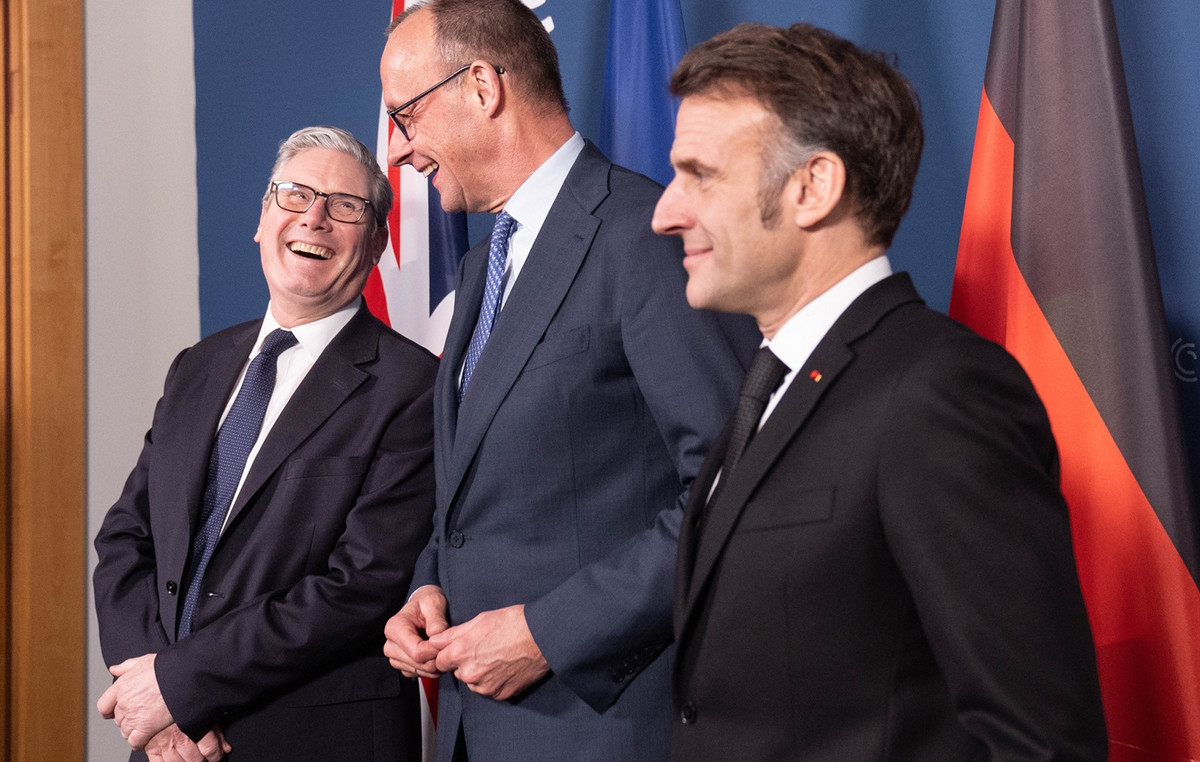
The Munich Security Conference’s opening day revealed a continent scrambling to re-arm. Delegates floated a radical re-design of the trans-Atlantic partnership, complete with European nuclear deterrence, home-grown space programs and a blunt message: we will not wait for America’s permission to defend ourselves.
“On Paper, Americans Get What They Want”
“On paper, the Americans are getting what they’ve long demanded: a Europe that spends far more on defense and depends far less on Washington for its security,” Politico wrote after the first sessions. “But Donald Trump may not like what that American pressure is creating.”
The numbers tell the story. EU members have pledged to lift military budgets to record levels, channel fresh billions into joint procurement and build sovereign supply chains in chips, drones and satellites. The goal is to shrink the continent’s 70-year habit of dialing 911 to the Pentagon every time a crisis erupts.
Yet the urgency is driven by fear as much as duty. Trump’s second-term threats—annex Greenland, tariff the European auto sector, abandon Ukraine—have convinced leaders that the post-1945 security blanket could vanish overnight.
Key Takeaways
- Europe is preparing its biggest defense spending surge since the Cold War
- Leaders openly discuss a “NATO 3.0” that treats the U.S. as an equal, not a protector
- French-German talks include folding France’s nuclear arsenal into a future European deterrent
- Trump officials welcome higher budgets but warn the shift could erode U.S. leverage
- All eyes are on Secretary of State Marco Rubio’s speech today for the White House’s final verdict
Married, but Living in Separate Bedrooms
Politico likened the trans-Atlantic couple to an aging married pair who stay wed yet move into different rooms. Both sides still swear by NATO’s Article 5, but trust is thin.
“The past year—from JD Vance’s Munich speech to Trump’s threat to subjugate Canada, the trashing of allies who fought alongside the U.S. in Afghanistan, and repeated calls to annex Greenland—has left its mark,” the analysis said.
American officials in Munich applauded Europe’s new checkbooks. Privately, they admit the Pentagon wants to pivot toward Asia and needs Europe to police its own neighborhood. Publicly, they warn that too much independence could weaken U.S. influence inside the alliance.
Macron: “Europe Must Learn to Act as a Geopolitical Power”
French President Emmanuel Macron stole the morning session, calling for a decades-long strategy that embeds European military, industrial and nuclear capabilities into a single hard-power core.
“It is the right time to dare. It is the right time for a strong Europe,” Macron declared. “Europe must learn to function as a geopolitical power. It was not part of our DNA.”
He brushed off claims of European decline and defended EU efforts to fight disinformation on social media, arguing that online “excesses” are “weakening Western democracies.”
Macron revealed that Paris is already in “strategic dialogue” with Berlin on how France’s independent nuclear force could fit into a wider European security architecture. “We must redefine deterrence within this framework,” he said, noting previous U.S.-Russia nuclear deals were “negotiated without the Europeans, even though Europe was directly affected.”
Merz: “U.S. Leadership Claim Is Being Questioned—Perhaps Already Lost”
German Chancellor Friedrich Merz went further, declaring that the U.S.-led rules-based order has “essentially collapsed” and that Washington “can no longer go it alone.”
“The claim to leadership by the United States is being questioned, perhaps it has already been lost,” Merz said. “In the age of great powers, it is no longer a given that our freedom is secured. It is under threat.”
He confirmed he has “discussed with Emmanuel Macron a European nuclear deterrent,” signaling that Berlin—long allergic to atomic talk—is now open to French warheads as insurance against a wavering America.
Merz also slammed U.S. culture wars, stressing, “The cultural wars of America are not ours,” and warned Beijing that European autonomy does not equal alignment with China.
Ukraine Aid: Europe Vows to Fill U.S. Gap
Both Macron and Merz pledged to keep arms and cash flowing to Kyiv even if Washington bows out. “There can be no agreement to end the war without Europe’s active participation,” Macron insisted, predicting the continent will face an “aggressive Russia” regardless of any cease-fire.
German sources say the Bundestag will unlock a further €12 billion for Ukraine this spring, while France is preparing to train three new Ukrainian brigades on French soil.
Rubio Arrives Today: Will Trump Bless or Bash the New Europe?
All attention now turns to Secretary of State Marco Rubio, who addresses the conference this morning. En route to Munich, Rubio tried to strike a balance: “Our future has always been interconnected and it will continue to be… so we just have to talk about what that future looks like.”
Diplomats expect Rubio to praise higher defense spending while warning Europe against undermining NATO structures or shopping for security in Beijing. A senior State Department aide told reporters Trump wants “burden-sharing, not burden-shedding.”
What Happens Next
- EU defense ministers meet in Brussels next week to convert Munich rhetoric into a formal “Defense Industrial Strategy” with joint procurement targets for 2026-2030
- France and Germany will launch a joint study on integrating France’s airborne nuclear deterrent with German command-and-control systems
- NATO planners are drafting a new force model that could station an additional 100,000 troops on the alliance’s eastern flank, financed 50-50 by Washington and Europe
- Ukraine expects the first batch of jointly funded European artillery shells to arrive by April, a test case for the continent’s new industrial muscles
The continent that once outsourced its security to Washington is drafting a new contract—one where Europe writes half the clauses. Whether Trump signs or rips it up will decide the shape of Western defense for a generation.
